Main page content
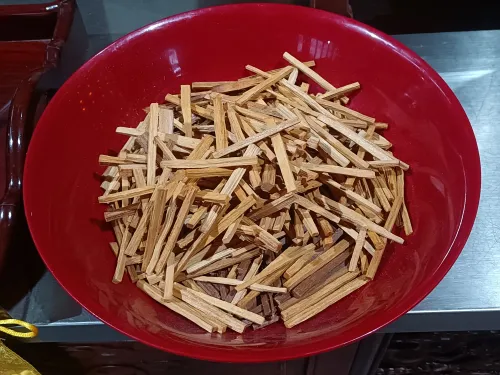
Sandalwood (Santalum album — Indian sandalwood, or S. spicatum — Australian sandalwood) is one of the most sacred and therapeutically prized botanical materials in the world — held in reverence for thousands of years in Hinduism, Buddhism, and Ayurveda. Its extraordinarily complex essential oil, rich in alpha- and beta-santalol, delivers a creamy, warm, woody fragrance of incomparable depth and a genuine therapeutic profile that has attracted significant modern pharmacological research.
Key Benefits of Sandalwood
- Alpha-santalol and beta-santalol — the primary active compounds — demonstrate anti-inflammatory, antimicrobial, and skin-regenerating properties, with alpha-santalol showing particular activity against skin pathogens and inflammatory pathways. (PubMed reference)
- Clinical and laboratory evidence supports sandalwood's anti-proliferative effect on certain skin cell lines — making it one of the few botanicals studied for potential skin protective properties at the cellular level.
- Deeply anti-inflammatory and soothing topically — sandalwood has been used in Ayurvedic preparations for skin conditions, rashes, and inflammatory skin disease for thousands of years.
- A proven natural astringent and antimicrobial — sandalwood preparations support clear, healthy skin by managing surface bacteria and reducing excess oil.
- In aromatherapy, sandalwood is the premier meditation and spiritual practice oil — its profound ability to calm the mind, deepen breathing, and support contemplative states has been used in sacred contexts for 4,000+ years.
- Supports emotional resilience and groundedness — sandalwood aromatherapy significantly reduces anxiety, improves mental clarity, and creates a felt sense of inner stability.
- One of the finest fixatives in natural perfumery — its woody-creamy base note persists for hours on the skin, anchoring and harmonizing every aromatic compound around it.
Sandalwood is the sacred center of the aromatic world — four thousand years of spiritual, medicinal, and cosmetic use across the great civilizations of Asia speak to an ingredient that is simply without equal. Its warmth, depth, and genuine therapeutic power make it irreplaceable in premium natural body care.
Traditional Chinese Medicine (TCM) Perspective
Tán Xiāng (檀香) — Sandalwood — is a classical TCM herb of exceptional standing, used for over 1,500 years for its aromatic Qi-moving, Spirit-calming, and channel-clearing properties. It is one of the most sacred therapeutic aromas in both Chinese and broader Asian healing traditions.
- Chinese Name: Tan Xiang (檀香) — Sandalwood
- Nature & Flavor: Warm; Pungent
- Meridians Entered: Spleen, Stomach, Heart, Lung
- Key TCM Actions: Moves Qi and relieves pain from Cold accumulation in the chest and abdomen, warms the middle Jiao, dispels Cold, opens the chest and unblocks the cardiac channels, calms the Heart Spirit through aromatic action.
Sandalwood's unique capacity to simultaneously warm (dispel Cold), move (open the channels), and calm (anchor the Spirit) reflects its broad meridian coverage across Heart, Lung, Spleen, and Stomach. In TCM's chest-pain medicine, tan xiang is used when Cold or Qi stagnation obstructs the Heart channel — a condition with remarkable similarity to what Western medicine describes as vasospastic angina. Its deeply grounding aroma is used in meditation and spiritual practice across Buddhist, Daoist, and Hindu traditions, reflecting the TCM understanding of aromatic medicines as acting not just on the physical body but on the Shen (spirit) level.
Sandalwood essential oil is used aromatically and topically — never internally. For topical therapeutic application, a 1–3% dilution in a carrier oil is standard: 1% (6 drops per 30 ml carrier) for sensitive skin or facial use; 2–3% (12–18 drops per 30 ml carrier) for body application or targeted pain-relief salves. In clinical aromatherapy studies, inhalation protocols typically use 3–5 drops diffused for 30–60 minutes. Watanabe et al. (2015) demonstrated measurable anxiolytic and autonomic nervous system effects from a single 30-minute inhalation session with sandalwood-dominant blends.
Sandalwood Grounding Meditation Anointing Oil
- Measure 30 ml jojoba oil into a small amber glass dropper bottle — jojoba's near-infinite shelf life protects sandalwood's delicate santalols from oxidation.
- Add 12 drops sandalwood essential oil (Santalum album or S. spicatum) for a 2% dilution. For a richer, deeper profile, add 4 drops vetiver and 4 drops frankincense alongside 8 drops sandalwood.
- Cap, invert gently 10 times to blend. Do not shake vigorously — this introduces air and accelerates oxidation.
- Apply 2–3 drops to pulse points (inner wrists, base of throat, temples) before meditation, sleep, or stress-relief practice. Warm the oil between your palms and inhale deeply before applying.
- Store in a cool, dark location. Shelf life is 12–18 months; alpha- and beta-santalol content remains stable when stored correctly.
Research note: Santalum album (Indian/Sri Lankan) and S. spicatum (Australian) both contain alpha- and beta-santalol but in differing ratios — S. album carries a higher alpha-santalol content and is generally considered the therapeutic and aromatic gold standard. Verify your supplier's species and origin; adulteration with synthetic santalol is widespread in commodity-grade products. This oil is for external and aromatic use only — ingestion of sandalwood essential oil is not recommended and may cause renal irritation.
Before you use this: Sandalwood essential oil is for topical and aromatic use only — internal ingestion is not recommended and may cause kidney irritation or toxicity. Always dilute to 1–3% in a carrier oil before skin application and perform a patch test on a small area of inner forearm 24 hours before broader use; although rare, contact sensitisation to sandalwood has been documented, particularly with prolonged or undiluted application. Individuals with known kidney disease or renal impairment should exercise caution with any form of concentrated sandalwood preparation and consult their health provider before use. Authentic Santalum album is a sustainably-managed protected species — ensure any product you purchase is sourced from certified, ethically cultivated material. The information on this page is for educational purposes only and does not constitute medical advice. Every person's health is unique — before incorporating any herb or botanical into your routine, especially if you are pregnant, nursing, managing a health condition, or taking prescription medications, please consult a qualified integrative health professional.


