
Main page content
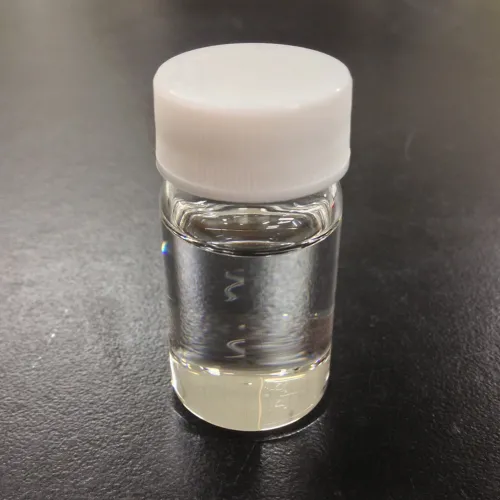
DMSO (dimethyl sulfoxide) is a naturally occurring compound derived from wood pulp during the paper manufacturing process. Though its name sounds synthetic, it is found in small amounts in many plants and foods. DMSO is used in natural topical formulations for one specific, extraordinary reason: it is among the most potent and well-researched skin penetration enhancers known — capable of carrying other dissolved active compounds directly through the skin barrier and into underlying tissues.
Key Benefits of DMSO
- Exceptional transdermal carrier — DMSO penetrates the skin rapidly and carries other dissolved therapeutic compounds (anti-inflammatories, analgesics, botanicals) with it, dramatically increasing their bioavailability in underlying tissues. (PubMed reference)
- Has intrinsic anti-inflammatory activity of its own — shown to inhibit free radical damage and reduce inflammatory markers independently of its carrier function.
- Possesses local analgesic properties — reduces pain signaling at the application site through mechanisms that are not yet fully elucidated but well-documented in clinical observation.
- Studied in clinical applications for arthritis, bursitis, tendinitis, and muscle injuries — approved in some countries for specific medical indications.
- Enables topical formulations to achieve deeper tissue penetration than would otherwise be possible, turning surface application into genuine deep-tissue delivery.
- Has a remarkably low toxicity profile for a transdermal compound — extensively tested in clinical settings over decades of use.
- Creates a characteristic brief garlic-like sensation during absorption — a sign of its active penetration work at the skin barrier level.
DMSO is the great enabler — the ingredient that makes every other therapeutic compound in a formula reach further, work deeper, and deliver more. It represents one of nature's most elegant solutions to the fundamental challenge of topical therapy: how to get active ingredients past the skin and into the tissue that needs them most.
Traditional Chinese Medicine (TCM) Perspective
DMSO (Dimethyl Sulfoxide) is a modern compound without a direct TCM parallel, but its extraordinary ability to penetrate tissues and carry therapeutic substances deep into the body resonates strongly with one of TCM's most important treatment principles: tōng luò (通络) — opening and unblocking the collaterals and channels.
- TCM Classification (functional analogy): Channel-opening, penetrating substances; similar in concept to tōng luò agents and aromatic openers
- Nature & Flavor (functional analogy): Neutral to slightly warm; Pungent (penetrating)
- Meridians Entered (functional analogy): All meridians (as a carrier)
- Key TCM Analogy: Opens the channels and collaterals, carries medicinal properties deep into the tissue layers, transforms accumulations and stagnation in the deep tissues.
TCM has its own class of "opening" and "penetrating" substances — musk (She Xiang), borneol (Bing Pian), and certain aromatic oils — used specifically to drive medicines deeper into the body and open blocked pathways. DMSO functions as a modern equivalent: a carrier substance that makes other therapeutic agents bioavailable at a tissue depth that surface application alone cannot reach. In a pain-relief formula, this corresponds to the classical TCM concept of "guiding medicines into the channels" (引经药).
DMSO is used topically as a penetration-enhancing carrier at concentrations typically ranging from 50–90% DMSO in combination with dissolved therapeutic agents. Clinical research by Jacob & Herschler (1986) and decades of veterinary and human trials demonstrate that 70% DMSO solutions provide an optimal balance between penetration depth and skin tolerability. For pain-relief applications, a 70% DMSO solution carrying dissolved anti-inflammatory or analgesic botanicals is the most well-documented protocol.
DMSO 70% Therapeutic Topical Carrier Protocol
- Begin with pharmaceutical-grade (99.9% pure) DMSO — impurity grade is non-negotiable, as DMSO will carry any dissolved contaminant directly through the skin barrier along with the intended actives.
- Dilute to a 70% working solution by combining 7 parts DMSO with 3 parts distilled water (not tap water — mineral contaminants will be driven transdermally).
- Dissolve or blend your chosen therapeutic agent (e.g. magnesium chloride, arnica extract, or herbal tincture) into the 70% DMSO solution at the recommended concentration for that ingredient before application.
- Apply with a clean glass dropper or cotton pad — never latex gloves or synthetic materials, which DMSO will dissolve and drive into the skin. Nitrile gloves are acceptable for brief contact only.
- Apply to clean, dry, chemical-free skin and allow to absorb fully (3–5 minutes) before covering with clothing or touching other surfaces.
Research note: DMSO will carry everything present on or dissolved in it through the skin — this is its power and its primary safety consideration. The application site must be scrupulously clean and free of lotions, perfumes, or synthetic residues. A characteristic brief garlic-like taste or breath odor following application is a normal sign of active transdermal absorption and is not cause for concern.
Before you use this: DMSO must be used at pharmaceutical-grade purity (99.9%) only — impure or industrial-grade DMSO will carry contaminants directly through the skin and into systemic circulation, which presents a serious health risk. DMSO is contraindicated for use over broken, infected, or inflamed skin, near the eyes, or on any area where synthetic chemicals, pesticides, or pharmaceutical residues are present, as it will drive these substances transdermally. Individuals with known sulfa sensitivity, kidney disease, liver disease, or bladder conditions should consult a qualified practitioner before use; DMSO is metabolized to dimethyl sulfone (MSM) and dimethyl sulfide in the body and may interact with blood thinners, steroids, and certain cardiac medications by amplifying their systemic absorption. Do not use DMSO during pregnancy or while nursing. The information on this page is for educational purposes only and does not constitute medical advice. Every person's health is unique — before incorporating any herb or botanical into your routine, especially if you are pregnant, nursing, managing a health condition, or taking prescription medications, please consult a qualified integrative health professional.


