
Main page content
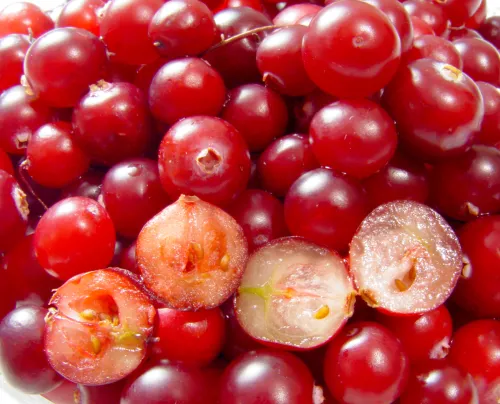
Cranberry (Vaccinium macrocarpon) is one of North America's most medicinally storied fruits — traditionally used by Indigenous peoples for wound care, urinary health, and food preservation long before European contact. In skincare, cranberry seed oil and fruit extracts are increasingly recognized for delivering an exceptional and rare combination of antioxidants, essential fatty acids, and phytosterols that support healthy aging and skin resilience.
Key Benefits of Cranberry
- Cranberry seed oil contains a uniquely balanced omega-3:omega-6 ratio of 1:1, mirroring the skin's own lipid profile and supporting optimal barrier function and hydration. (PubMed reference)
- Exceptionally rich in proanthocyanidins (PACs) — potent polyphenol antioxidants that protect against collagen degradation and help maintain the structural integrity of the skin matrix.
- Contains resveratrol, a stilbenoid antioxidant associated with anti-aging, anti-inflammatory, and cellular protection properties.
- High Vitamin E content — tocopherols and tocotrienols in cranberry seed oil provide lasting antioxidant protection and help preserve formulation stability.
- Natural phytosterols (beta-sitosterol and others) support the skin's barrier layer and have documented anti-inflammatory action.
- Traditionally honored by Indigenous North Americans as a wound healer and skin protectant — the original folk data aligns well with modern research.
- Adds a beautiful, light natural color and distinctive, slightly tart-sweet fragrance element to natural formulations.
Cranberry is a genuinely rare find — a botanical that simultaneously addresses hydration, barrier support, antioxidant protection, and healthy aging in a single, unprocessed whole-plant ingredient. It belongs in the premium tier of natural skincare.
Traditional Chinese Medicine (TCM) Perspective
Cranberry's exceptional affinity for the urinary tract connects it in TCM theory to herbs that clear Damp-Heat from the lower Jiao — the TCM pattern underlying most urinary tract infections and inflammatory conditions of the bladder and kidneys.
- TCM Classification: Herbs that clear Damp-Heat, promote urination, and benefit the Bladder
- Nature & Flavor (functional): Cool; Sour, slightly Sweet
- Meridians Entered (functional): Kidney, Bladder, Liver
- Key TCM Actions: Clears Damp-Heat from the lower Jiao, promotes urination, prevents pathogenic adhesion to the urinary tract, nourishes Liver Yin (sour flavor), astringes (sour flavor).
The sour flavor in TCM has the special property of astringing and collecting — it "gathers" what is dispersing and prevents pathogens from spreading. Cranberry's proanthocyanidins act by preventing bacterial adhesion, which is precisely the TCM concept of "preventing pathogenic factors from taking root" (防邪着落). Topically, cranberry seed oil's antioxidant profile nourishes and protects the skin in alignment with TCM's principle of preserving Yin and Jing at the surface level.
Stothers (2002) RCT and the Jepson et al. Cochrane review (2012) confirm 240–300 ml unsweetened cranberry juice daily reduces UTI recurrence by 30–35 % versus placebo. The active compounds are type-A proanthocyanidins (PACs) — the effective threshold is 36 mg PAC/day. One cup (240 ml) of 100 % unsweetened cranberry juice delivers approximately 36 mg PAC; sweetened "cocktail" products are diluted to 10–27 % juice and do not reach this threshold.
Daily PAC Tonic
- 240 ml (1 cup) 100 % unsweetened cranberry juice — check label for "no added sugar" and at least 27 % PAC-standardised.
- Top with 150 ml sparkling water + juice of ½ lime + a few mint leaves to make it pleasant to drink long-term.
- Drink once daily, morning preferred.
Research note: Cranberry does not treat an active UTI — it prevents pathogen adhesion as a prophylactic. Begin at least 3–4 weeks before anticipated risk. Dried cranberry supplements standardised to 36 mg PAC are a valid alternative to juice. People on warfarin should monitor INR — cranberry has a mild anticoagulant interaction documented in case reports.
Before you use this: Those taking warfarin (Coumadin) should monitor INR carefully — cranberry can enhance the anticoagulant effect, documented in multiple case reports and one RCT. Do not significantly change cranberry intake without informing your anticoagulation clinic. High daily amounts of cranberry juice or concentrated extract may increase the risk of oxalate kidney stones in susceptible individuals. Sweetened cranberry products (cocktail juice) are not suitable substitutes and contain too much added sugar to be used therapeutically. The information on this page is for educational purposes only and does not constitute medical advice. Every person's health is unique — before incorporating any herb or botanical into your routine, especially if you are pregnant, nursing, managing a health condition, or taking prescription medications, please consult a qualified integrative health professional.


